


Hair Transplant Surgery in Glasgow
Restore your hairline and confidence with advanced hair transplant surgery at Merchant City Medical Group in Glasgow. Our clinic specialises in modern Follicular Unit Extraction (FUE) hair transplant procedures designed to achieve natural hairline design and long-lasting hair restoration. Each treatment is carefully planned by an experienced hair transplant surgeon to match the patient’s hair type, donor density and long-term hair loss pattern.
Why Choose US
- Advanced FUE beard transplant techniques
- Natural hairline design
- Personalised treatment planning
- HIS registered medical clinic in Glasgow
Procedure overview
TYPE OF ANAESTHETIC
Local anaesthetic
LENGTH OF SURGERY
4–6 hours depending on graft numbers
HOSPITAL STAY
Day procedure
RECOVERY
7 days
FINAL RESULTS
12–15 months
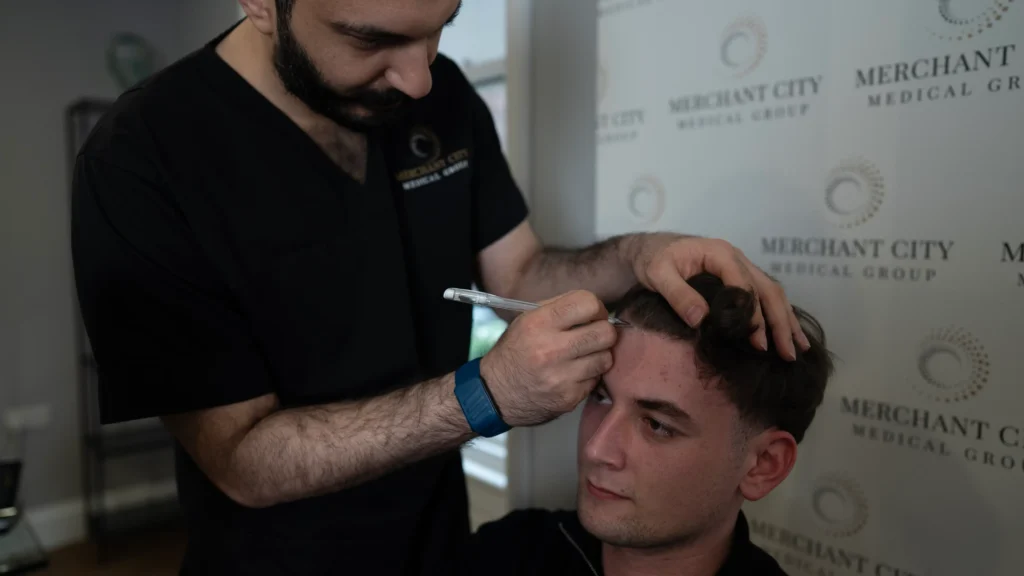
What Is Hair Transplant Surgery?
FUE Hair Transplant Technique
- Donor area assessment
- Extraction of individual follicular units
- Natural hairline design
- Precise graft implantation
Treatment Details
The number of grafts required depends on the extent of hair loss, donor hair density and the desired hairline design.
Typical graft ranges include:
Hairline restoration
1,500 – 2,000 grafts
Hairline and mid-scalp
2,000 – 3,000 grafts
Advanced hair loss
3,000 – 5,500 grafts
Giga sessions
6,000 – 12,000 grafts performed over two consecutive treatment days
During consultation, your hair transplant surgeon will assess your donor area, scalp condition and hair characteristics to determine the most appropriate graft number for natural and balanced results.
For patients with more advanced hair loss, larger graft sessions may be recommended.
Merchant City Medical Group offers giga hair transplant sessions where between 6,000 and 12,000 grafts can be transplanted over two consecutive treatment days.
This approach allows significant hair restoration for patients with extensive hair loss while maintaining careful graft placement and natural hairline design.
Hair follicles used for transplantation are typically taken from the back and sides of the scalp. These areas are generally more resistant to genetic hair loss.
Once transplanted, these follicles retain their resistance to hair loss and continue to grow hair in their new location.
Careful donor area management is essential to maintain natural density and ensure sufficient grafts remain available for any future procedures if required.
A successful hair transplant is not only about graft numbers. Hairline design is one of the most important parts of achieving a natural-looking result.
Your hair transplant surgeon will design a hairline that suits your facial structure, age, hair characteristics and long-term hair loss pattern. The goal is to create a result that looks balanced, natural and appropriate both now and in the future.
Careful planning helps avoid hairlines that appear too low, too straight or unnatural over time.
Hair transplant results develop gradually as the transplanted follicles settle and begin producing new hair.
Week 1–2
Small scabs form around transplanted follicles and fall away as the scalp heals.
Month 1–3
Some transplanted hairs shed temporarily as follicles enter a resting phase. This is a normal part of the hair growth cycle.
Month 3–6
New hair growth begins as follicles enter the active growth phase.
Month 6–9
Hair continues to grow and gradually becomes thicker.
Month 9–12
Hair density continues to improve as the transplanted follicles mature.
Month 12–15
Final results typically become visible as the transplanted hair fully matures and thickens.
Merchant City Medical Group provides hair transplant surgery in Glasgow within a Healthcare Improvement Scotland (HIS) registered clinic.
Hair transplant procedures at Merchant City Medical Group focus on natural hairline design, balanced density and long-term hair growth.
View examples of real patient results in our before and after gallery, or explore additional results to see a wider range of outcomes.
Hair transplant procedures at Merchant City Medical Group focus on natural hairline design, balanced density and long-term hair growth.
View examples of real patient results in our before and after gallery, or explore additional results to see a wider range of outcomes.
Am I Suitable for a Hair Transplant?
- Have male or female pattern hair loss
- Still have healthy donor hair at the back or sides of the scalp
- Have a stable pattern of hair loss
- Are looking for a long-term solution to hair loss
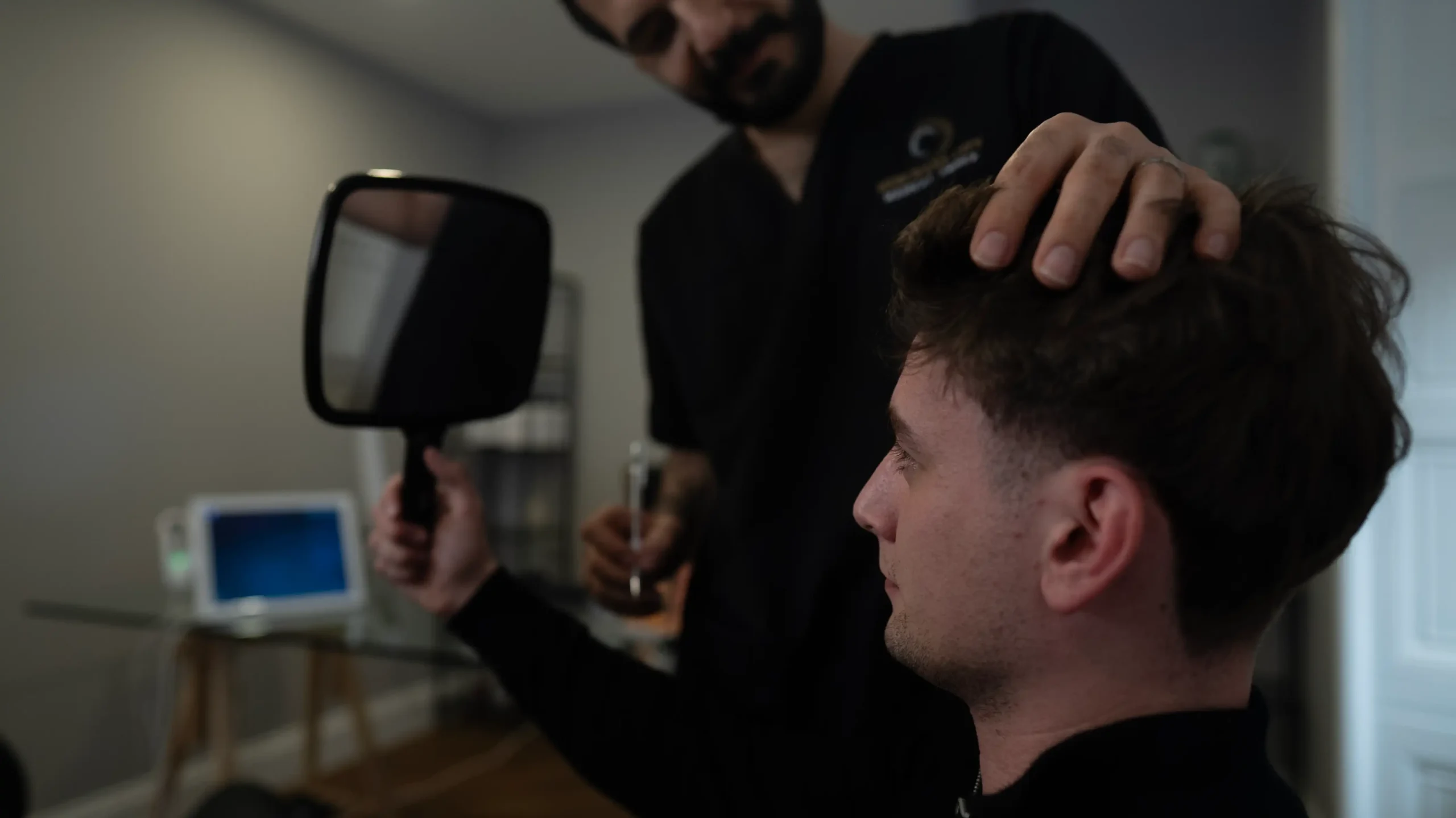
Many patients consider travelling abroad for hair transplant surgery. While overseas procedures may appear cheaper initially, they can involve limited follow-up care and reduced clinical oversight.
Receiving treatment at a UK clinic allows patients to benefit from regulated medical standards, professional surgical environments and accessible aftercare.
Merchant City Medical Group operates from a Healthcare Improvement Scotland (HIS) registered clinic in Glasgow, ensuring treatment is delivered within a regulated healthcare setting with ongoing support.
Merchant City Medical Group provides hair transplant surgery in Glasgow for patients across Scotland and the UK.
Our clinic offers advanced FUE hair transplant procedures in a Healthcare Improvement Scotland (HIS) registered medical facility, allowing patients to receive treatment in a regulated clinical environment with professional aftercare and follow-up support.
What Happens During Your Hair Transplant Consultation?
- Assess your hair loss pattern
- Examine donor hair density
- Discuss hairline design options
- Estimate the number of grafts required
- Explain the procedure and recovery process
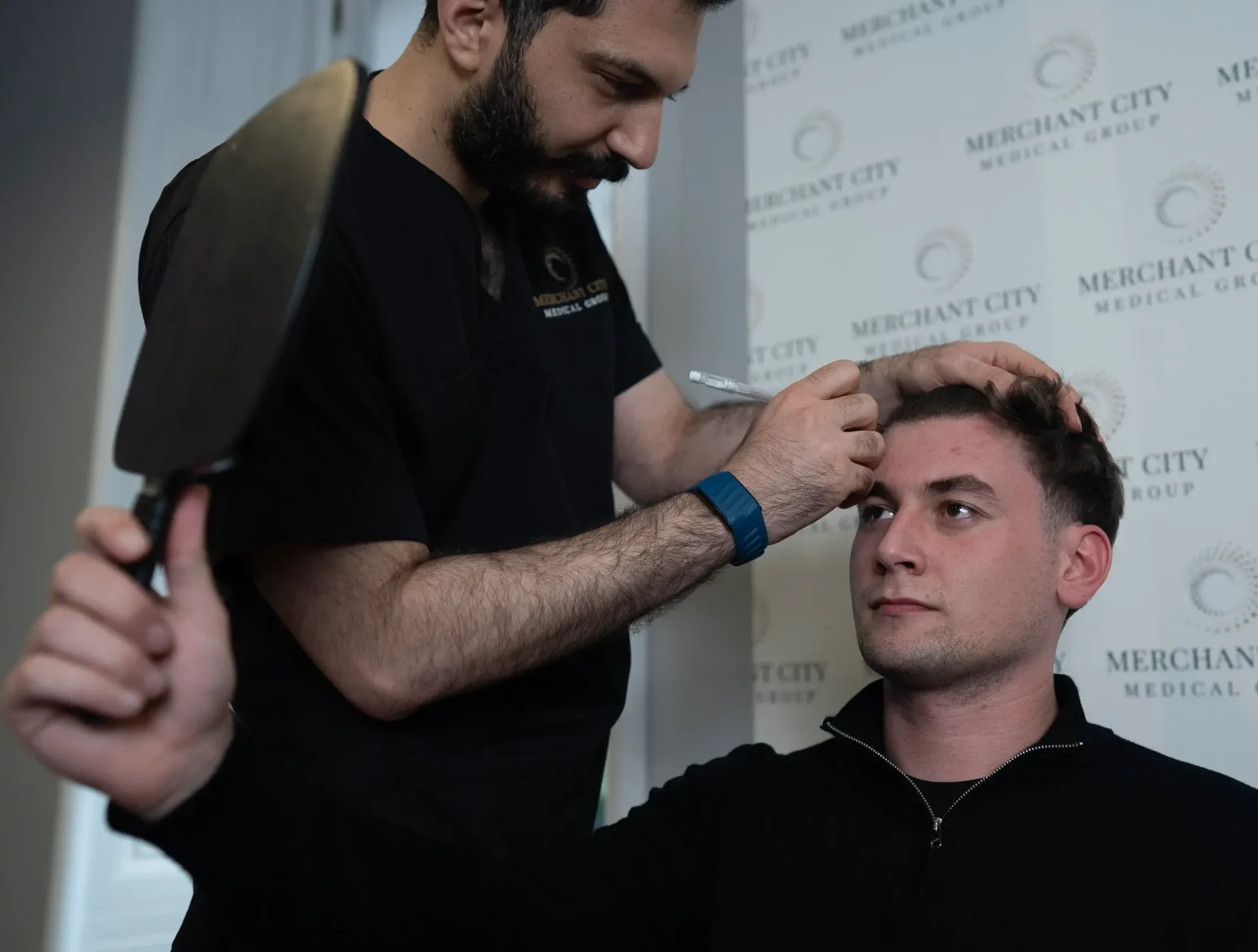
Merchant City Medical Group operates from a Healthcare Improvement Scotland (HIS) registered clinic in Glasgow.
HIS is the regulatory body responsible for overseeing independent healthcare services in Scotland, ensuring clinics meet standards for safety, governance and patient care.
Receiving treatment in a regulated UK medical clinic allows patients to undergo hair restoration in a controlled clinical environment with professional aftercare and follow-up support.
The cost of a hair transplant depends on the number of grafts required, the complexity of the procedure and the overall treatment plan. Please visit our pricing page for more details.
During consultation, your hair transplant surgeon will assess your hair loss pattern, donor hair density and desired hairline design before providing a personalised graft estimate and treatment plan.
This ensures each procedure is tailored to the patient’s needs and long-term hair restoration goals.
Frequently Asked Questions
Q1: Does a hair transplant hurt?
The procedure is performed under local anaesthetic, so discomfort during treatment is usually minimal.
Q2: How long does a hair transplant take?
Most procedures take between 6 and 8 hours depending on the number of grafts required. Larger sessions may be carried out over two treatment days.
Q3: When will new hair grow?
New hair growth usually begins around 3 to 4 months after the procedure, with final results typically visible between 12 and 15 months.
Q4: Is a hair transplant permanent?
Transplanted follicles are generally resistant to genetic hair loss and continue to grow hair in their new location. However, natural hair loss may continue in untreated areas, so long-term planning is important.
Q5: What is the recovery time after a hair transplant?
Most patients return to normal activities within a few days. Small scabs form around the transplanted follicles and typically resolve within 7 to 10 days.
Q4: Can I have a large session if I have advanced hair loss?
Yes. For suitable patients with more advanced hair loss, larger graft procedures or giga sessions may be recommended, depending on donor area quality and treatment goals.
Many patients researching hair restoration consider travelling overseas for treatment. While this can appear attractive due to lower advertised prices, there are several important factors patients should carefully consider.
Hair transplant surgery is a medical procedure that requires careful planning, appropriate surgical technique and ongoing aftercare. Choosing a clinic within the UK allows patients to receive treatment within a regulated healthcare environment and to access follow-up care more easily.
Benefits of Treatment Within a UK Clinic
- Procedures performed within a regulated medical environment
- Access to experienced surgical teams and trained clinical staff
- Clear consultation and treatment planning
- Structured aftercare and follow-up support
- Easier access to the clinic if questions arise during recovery
Merchant City Medical Group operates from a Healthcare Improvement Scotland (HIS) registered clinic in Glasgow. This ensures procedures are delivered within a regulated healthcare setting with professional clinical oversight.
For many patients, receiving treatment locally provides reassurance that support is available both during the procedure and throughout the recovery process.
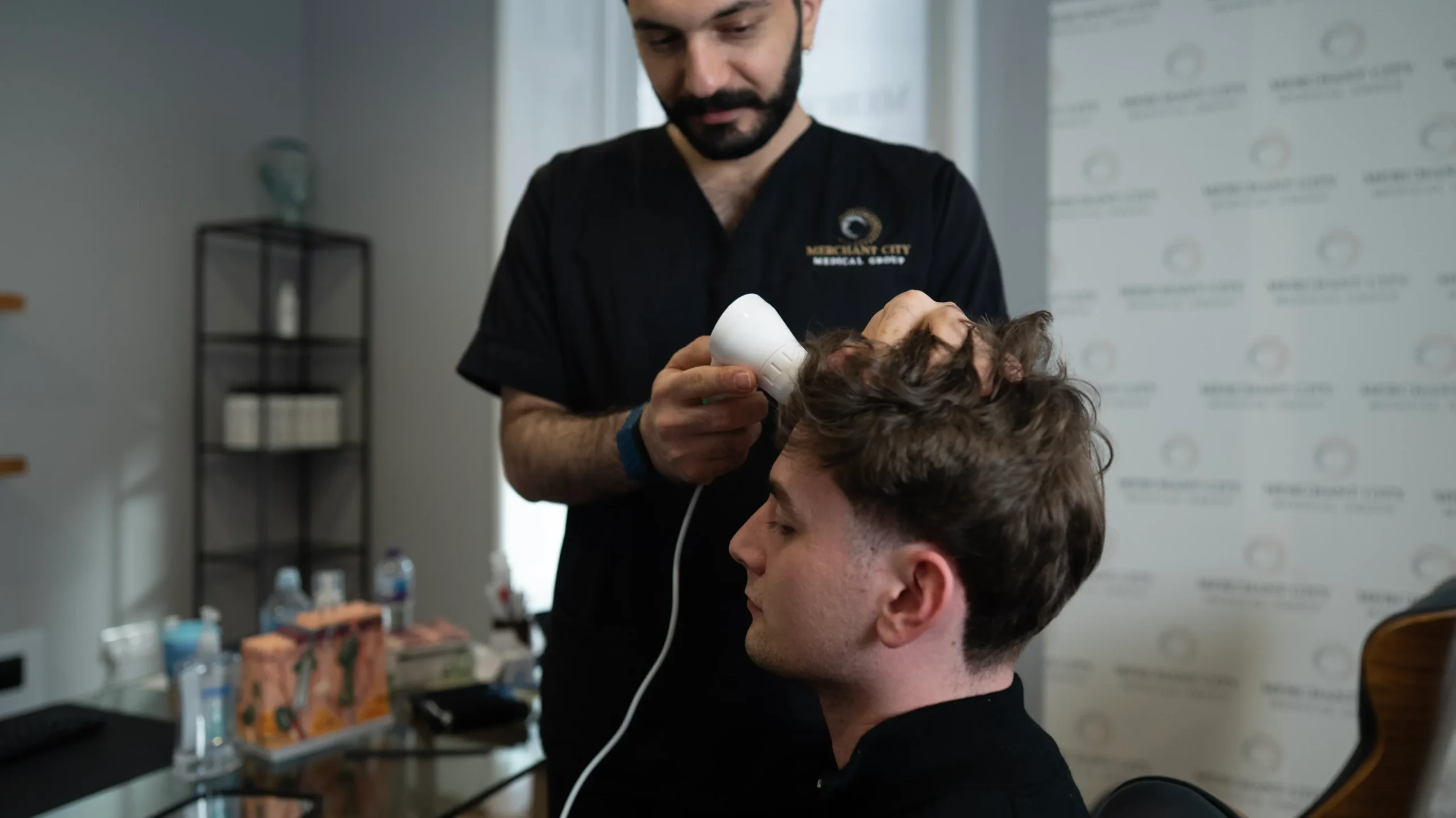
Your consultation allows the surgeon to assess your hair loss pattern, donor density, scalp characteristics and hairline design.
Following assessment, you will receive a personalised treatment plan and graft estimate based on your goals and suitability for treatment.
If you are considering hair transplant surgery in Glasgow, contact Merchant City Medical Group to arrange your consultation.
You can also read our detailed Hair Transplant Recovery Timeline to understand the healing stages after surgery.
Patients also receive full guidance through our Hair Transplant Aftercare Instructions
Excellence Record
- 30+ Years of combined experience
- 10 + Experts
- 1000 + Satisfied Patients

