
Merchant City Medical Group offers surgical and non-surgical cosmetic procedures, from our state of the art clinics throughout the UK & Europe.

Mesotherapy

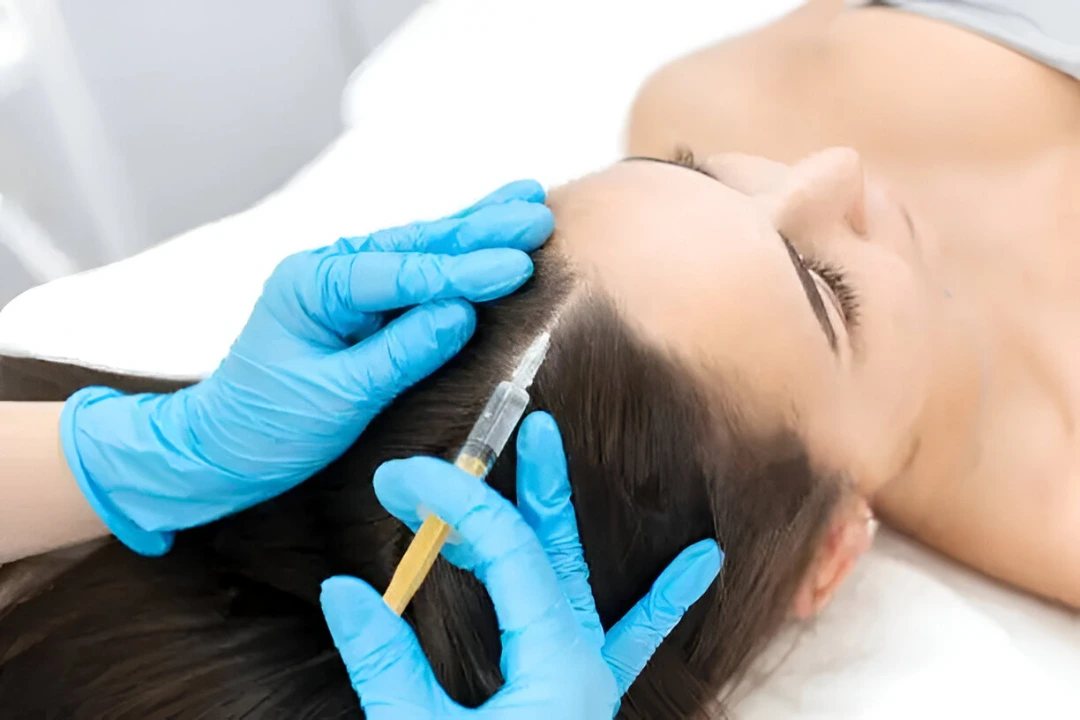
At Merchant City Medical Group, we offer bespoke, non-surgical hair restoration solutions designed around your individual needs. Our mesotherapy treatments are tailored to support thinning hair, improve scalp health, and enhance the growth of transplanted hair — all delivered to the highest clinical standards with expert care throughout your journey.

Procedure overview

TYPE OF ANAESTHETIC

None

LENGTH OF SURGERY

30 Minutes

HOSPITAL STAY

No

RECOVERY

No downtime.

Procedure types

Mesotherapy delivers essential nutrients directly to the area surrounding the hair follicles, helping to strengthen existing hair and encourage new growth. The treatment is designed to support follicles by improving their environment and increasing their ability to survive and thrive. This non-surgical approach is often used as a standalone treatment for early hair thinning or as a supportive therapy following hair transplant procedures.

Our Approach

Tailored, Non-Surgical Care

At Merchant City Medical Group, every mesotherapy treatment begins with a detailed consultation. We assess your scalp health, hair density, and hair loss progression before creating a personalised treatment plan. Our professional technicians use precise techniques to ensure treatments are delivered safely, comfortably, and effectively, with a focus on long-term hair health rather than short-term results.

Benefits

  • Non-surgical and minimally invasive treatment
  • Virtually pain-free with no anaesthesia required
  • Improves blood circulation to the scalp
  • Helps reduce inflammation and excess DHT
  • Stimulates collagen production
  • Strengthens hair follicles and increases follicle size
  • Supports hair regrowth and reduces hair loss
  • Supports hair regrowth and reduces hair loss
  • Cost-effective option for early-stage hair thinning
What are the risks?

Mesotherapy is considered a safe, minimally invasive treatment when performed by trained professionals. However, as with any injectable procedure, some risks and side effects may occur. These are typically mild and temporary.

These effects are normal and usually resolve within a short period:

  • Mild redness at injection sites

  • Temporary tenderness or sensitivity of the scalp

  • Slight swelling

  • Minor pinpoint bleeding

These effects occur less frequently and are usually short-lived:

  • Mild bruising

  • Temporary itching

  • Sensation of tightness in the scalp

Rare complications are uncommon but may include:

  • Localised infection

  • Allergic reaction to injected substances

  • Prolonged inflammation

Commonly Asked Questions

The treatment is virtually pain-free, and no local anaesthetic is required.

Treatment plans vary but typically involve monthly or bi-monthly sessions over 1–2 years.

Improvements may be noticed gradually over several months as hair growth cycles respond to treatment.

Yes, it is often used to support transplanted hair and improve overall scalp health.

No downtime is required, and most patients return to work immediately after treatment.

What to Expect & Mesotherapy Aftercare

  • Quick in-clinic procedure

  • Multiple small injections into the scalp

  • Treatment typically lasts under 30 minutes

  • No dressings required

  • Avoid touching or washing the scalp for a short period

  • Normal daily activities can be resumed immediately
Why the hair transplant popularity is growing

Excellence Record

Merchant City Medical Group is proud to be one of the leading providers of Hair Transplant Surgeries and Medical Aesthetics within the UK and Europe. With our extensive team of expert surgeons, nurse practitioners and consultants, you will be met with the utmost dedication and compassion throughout your journey with us.

Book a Free Consultation

Enter all details and submit the form and we will get back to you.
I consent to being contacted via WhatsApp for appointment reminders, updates, and relevant information. Message Frequency varies based on the treatment. text: STOP to stop.

Cosmetic Procedure Screening Questionnaire

It can be used as a screening questionnaire to tell whether you might have BDD.

1) How often do you do you deliberately check your feature(s)? Not accidentally catch sight of it. Please include looking at your feature in a mirror or other reflective surfaces like a shop window or looking at it directly or feeling it with your fingers.
2) To what extent do you feel your feature(s) are currently ugly, unattractive or ‘not right’?
3) To what extent does your feature(s) currently cause you a lot of distress?
4) How often does your feature(s) currently lead you to avoid situations or activities?
5) To what extent does your feature(s) currently preoccupy you? That is, you think about it a lot and it is hard to stop thinking about it?
6) If you have a partner, to what extent does your feature(s) currently have an effect on your relationship with an existing partner? (e.g. affectionate feelings, number of arguments, enjoying activities together). If you do not have a partner, to what extent does your feature(s) currently have an effect on dating or developing a relationship?
7) To what extent does your feature(s) currently interfere with your ability to work or study, or your role as a homemaker? (Please rate this even if you are not working or studying: we are interested in your ability to work or study.)
8) To what extent does your feature(s) currently interfere with your social life? (with other people, e.g. parties, pubs, clubs, outings, visits, home entertainment)
9) To what extent, do you feel your appearance is the most important aspect of who you are?

Do I have BDD?

Body Dysmorphic Disorder

You have scored 0

When you score more than 40 points, this is an indication that you likely have Body Dysmorphic Disorder. However, this is not a formal diagnosis. This test can also be used after a treatment to see if symptoms have improved.

What now?

For more information on BDD and support, you can contact us.

If you are a UK resident, we suggest:

    • reaching out to your GP for more help
    • self-refer to NHS Talking Therapies.

When speaking to a health professional, you may present your clinic history or a printed form to clearly outline the symptoms you’ve experienced.