
The 3 Stages of Hair Growth: Understanding the Hair Growth Cycle
The 3 Stages of Hair Growth:
Understanding the Hair Growth Cycle
Hair growth might seem straightforward, but every strand on your scalp follows a carefully regulated biological process known as the hair growth cycle. This cycle determines how long hair grows, when it stops growing, and when it naturally sheds before new hair begins to grow again.
Most people are born with around 100,000 hair follicles on their scalp. The number can vary slightly depending on natural hair colour. Individuals with darker hair often have roughly this number of follicles; those with red hair may have slightly more, and people with blonde hair tend to have fewer follicles overall. However, follicle count does not necessarily determine how thick hair appears, as hair thickness and density also depend on strand size and growth patterns.
Each follicle moves independently through a continuous cycle consisting of three main stages of hair growth:
- Anagen phase – the growth stage
- Catagen phase – the transition stage
- Telogen phase – the resting and shedding stage
These stages repeat throughout life, allowing hair to grow, shed, and regrow naturally. Understanding the hair growth cycle can help explain why daily hair shedding is normal and why some people may experience noticeable hair thinning or hair loss.
What is the Hair Growth Cycle?
The hair growth cycle refers to the repeating biological process that every hair follicle undergoes while producing hair. Unlike other processes in the body, hair follicles do not operate in sync with one another. Instead, each follicle progresses through the cycle at its own pace.
Because of this staggered pattern, most hairs on the scalp remain in the growth phase while only a small percentage are transitioning or resting. This natural variation helps maintain consistent hair coverage and prevents all hair from shedding at once.
On average, a person may experience hair loss of between 50 and 100 hairs per day, which is considered completely normal. These hairs are simply completing the final stage of their cycle and making room for new hair growth.
However, when certain factors disrupt this cycle, more follicles may enter the resting stage prematurely, leading to increased shedding or thinning hair.
Anagen Phase: The Active Growth Stage
The anagen growth phase is the most active stage of the hair growth cycle. During this stage, the hair follicle is fully engaged in producing new hair.
At the base of each hair follicle is the hair bulb, which contains specialised cells responsible for generating the hair shaft. These cells multiply rapidly and push upward through the follicle, forming the strand of hair that eventually emerges from the scalp.
As the hair grows and reaches the surface of the skin, its natural characteristics become visible. These include the hair’s colour, thickness, and texture, such as whether it grows straight, wavy, or curly.
Duration of the Anagen Phase
The anagen phase is the longest stage of the hair growth cycle and can last between four and six years for scalp hair. In some individuals, genetic factors may allow the growth phase to last even longer.
During this time, hair typically grows around 1 to 1.3 centimetres per month.
Because this stage lasts several years, about 85–90% of hair follicles on the scalp are usually in the anagen phase at any given moment. This is why most of the hair on your head appears to be actively growing.
Catagen Phase: The Transition Stage
After the growth stage ends, the hair follicle enters the catagen phase, which is a very short transition stage.
During this stage, hair growth stops, and the follicle begins to shrink. The lower portion of the follicle gradually separates from the blood vessels that previously provided the nutrients required for growth.
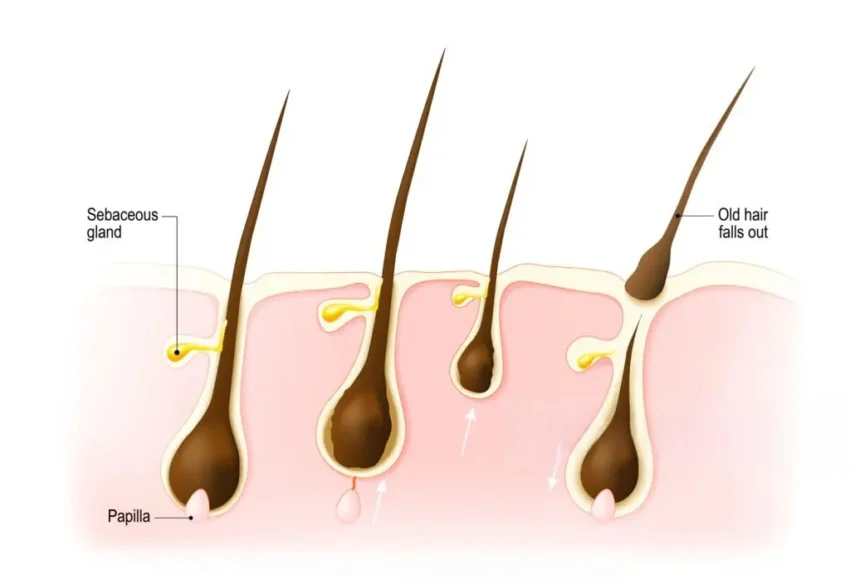
As the follicle contracts, the hair shaft detaches from the base of the follicle and forms what is often referred to as a club hair. Although the hair remains inside the follicle, it is no longer actively growing.

How Long Does the Catagen Phase Last
The catagen stage is relatively brief compared with the other phases and usually lasts two to four weeks.
Since this phase is so short, only a small percentage of hair follicles are typically in this stage at any given time.
Telogen Phase: The Resting and Shedding Stage
The telogen phase is the final stage of the hair growth cycle and is commonly known as the resting phase.
During this period, the follicle becomes inactive, and the hair strand remains in place without growing. Meanwhile, a new hair begins forming beneath the old one within the follicle.
Eventually, the old hair is released and falls out naturally. This shedding process is completely normal and allows the follicle to begin producing a new hair strand.
Duration of the Telogen Phase
The telogen stage generally lasts around three months. During this time, the hair gradually loosens before shedding.
Many of the hairs that appear on pillows, in brushes, or in the shower are hairs that have reached the telogen stage. Losing about 50 to 100 hairs each day is considered part of a healthy hair cycle.
Once shedding occurs, the follicle returns to the anagen stage and the cycle begins again.
Why Hair Follicles Are Not in the Same Stage
A key feature of human hair growth is that follicles function independently rather than simultaneously. This means that different hairs on the scalp are in different stages of the cycle at any given time.
Because the anagen stage lasts much longer than the other phases, the majority of hair follicles remain in the growth phase while only a smaller proportion are transitioning or resting.
This staggered cycle ensures that hair loss occurs gradually rather than all at once, helping the scalp maintain consistent hair density.
Factors That Affect the Hair Growth Cycles
Although the hair cycle is natural, several factors can influence how well it functions.
Genetics acts as an important role in determining the length of the anagen phase and the thickness of hair strands. Genetic conditions such as patterned hair loss can shorten the growth phase and cause hair follicles to gradually shrink over time.
Hormonal fluctuations can disrupt the normal hair cycle. Pregnancy, menopause, thyroid disorders, and hormonal imbalances may trigger increased shedding or temporary hair thinning.
Significant physical or emotional stress is known to push hair follicles prematurely into the telogen phase, causing increased shedding. This condition is commonly known as telogen effluvium.
Hair follicles require adequate nutrients such as protein, iron, and essential vitamins to maintain healthy growth. Nutritional deficiencies may weaken the hair shaft and affect the normal cycle.
Certain illnesses, medications, and scalp disorders can interfere with normal follicle activity and contribute to hair loss.
Why Understanding Hair Growth Stages Matters
Understanding the hair growth cycle can help explain why hair thinning or hair loss occurs and why some treatments are effective.
Many hair restoration treatments aim to extend the anagen phase, allowing hair to remain in the growth stage for longer. By prolonging this stage, follicles have more time to produce thicker and healthier hair strands.
Other treatments focus on stimulating dormant follicles so they can re-enter the growth phase and begin producing new hair again.
By supporting the natural hair cycle, these treatments can help improve overall hair density and scalp health.
When to Seek Professional Advice
Occasional hair shedding is normal, but noticeable hair thinning or excessive hair loss may indicate that the hair growth cycle has been disrupted. You may want to seek professional advice if you notice:
- Sudden or excessive hair shedding
- Thinning at the crown or hairline
- A widening part line
- Visible patches of scalp
Early assessment can help identify the underlying cause and determine the most effective treatment approach.
Frequently Asked Questions About Hair Growth
It is normal for most individuals to shed between 50 and 100 hairs daily as part of the natural hair growth cycle.
The growth phase alone can last four to six years, meaning the complete cycle for a hair strand can span several years.
Hair shedding typically occurs during the telogen phase, when the follicle releases the old hair and prepares to grow a new one.
Yes. Once a hair strand sheds, the follicle usually re-enters the anagen stage and begins producing a new hair strand, restarting the cycle.
If you are concerned about hair thinning or changes in your hair growth cycle, speaking with a specialist can provide clarity and guidance.
At Merchant City Medical Group, experienced professionals provide personalised free consultations to evaluate scalp health, hair density, and the stage of hair loss. Based on your individual needs, the team can recommend appropriate treatments designed to support the natural hair growth cycle and improve hair quality.
Booking a consultation is the first step toward understanding the cause of your hair concerns and exploring options that may help restore stronger, healthier hair.
More Articles
Excellence Record
- 30+ Years of combined experience
- 10 + Experts
- 1000 + Satisfied Patients