
Merchant City Medical Group offers surgical and non-surgical cosmetic procedures, from our state of the art clinics throughout the UK & Europe.

Prominent Ear Correction & Otoplasty

Restore confidence with expert ear correction and otoplasty at Merchant Medical Group. Our experienced consultants provide personalised solutions for protruding ears, asymmetry, or reshaping earlobes, using techniques refined through extensive training and experience. We offer both surgical otoplasty and earlobe repair, focusing on natural-looking results and patient comfort.

Procedure overview

TYPE OF ANAESTHETIC

Local or General

LENGTH OF SURGERY

1–2 Hous

HOSPITAL STAY

0–1 Day

RECOVERY

Few days off work, 6 weeks before strenuous exercise
What is Pinnaplasty?

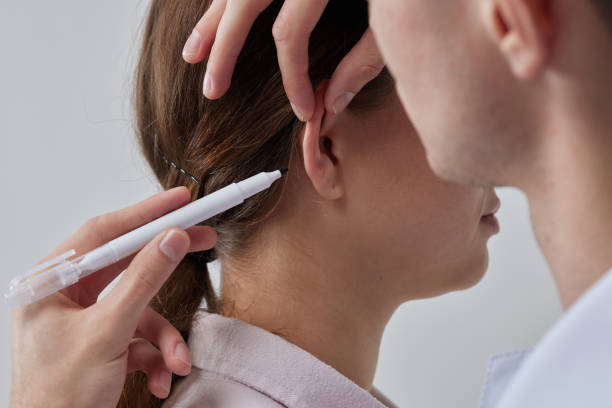
Pinnaplasty, also called otoplasty, is a surgical procedure to correct prominent ears. It involves reshaping the cartilage and skin behind the ear to bring the ears closer to the head for a more balanced appearance. The procedure usually takes 1–2 hours and is often performed under local anaesthetic in adults.

What to Expect

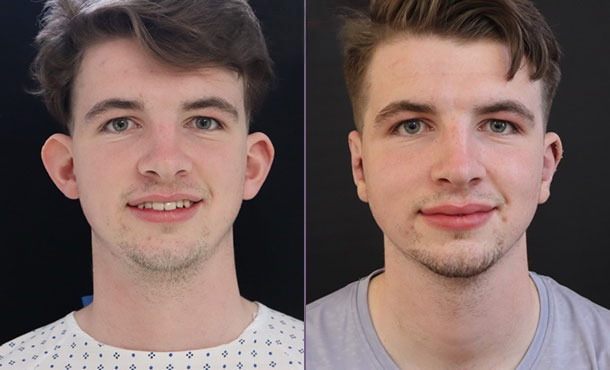
You will notice an immediate improvement in the shape and position of your ears. If a suture technique is used, bruising is usually minimal.

The split earlobe is corrected immediately. Stitches are typically removed after about a week, and scars may remain red or slightly raised for up to six months before settling.
What are the risks?

It’s normal for ears to have slight differences in shape or position after surgery.

Scars are usually hidden behind the ear and settle well over time. Rarely, thickened or itchy scars (keloids) can develop in patients prone to this.

Occasionally, the ears may not be pinned back as much as expected, which might require minor adjustment.

Some degree of prominence may return if the internal stitches fail, though this is uncommon.


Internal stitches are usually well-buried, but in rare cases, the stitch may become noticeable or protrude. If this happens after six months, it can be easily removed under local anaesthetic.

Rarely, the surgical site may take longer to heal or reopen, which can affect the final shape.


Infection is uncommon and usually treated with antibiotics. Severe infection is very rare but can affect the ear’s appearance.

Bleeding is uncommon, particularly with modern suture techniques. If it occurs and is not treated, it can affect healing or the ear shape.


A small number of patients (around 5–10%) may require further surgery to refine the results.

Ear Correction Aftercare

Follow your surgeon’s instructions, keep the ears clean and protected, and avoid pressure or strenuous activity during the initial healing period.

Excellence Record

Merchant City Medical Group is proud to be one of the leading providers of Hair Transplant Surgeries and Medical Aesthetics within the UK and Europe. With our extensive team of expert surgeons, nurse practitioners and consultants, you will be met with the utmost dedication and compassion throughout your journey with us.

Book a Free Consultation

Enter all details and submit the form and we will get back to you.
I consent to being contacted via WhatsApp for appointment reminders, updates, and relevant information. Message Frequency varies based on the treatment. text: STOP to stop.

Cosmetic Procedure Screening Questionnaire

It can be used as a screening questionnaire to tell whether you might have BDD.

1) How often do you do you deliberately check your feature(s)? Not accidentally catch sight of it. Please include looking at your feature in a mirror or other reflective surfaces like a shop window or looking at it directly or feeling it with your fingers.
2) To what extent do you feel your feature(s) are currently ugly, unattractive or ‘not right’?
3) To what extent does your feature(s) currently cause you a lot of distress?
4) How often does your feature(s) currently lead you to avoid situations or activities?
5) To what extent does your feature(s) currently preoccupy you? That is, you think about it a lot and it is hard to stop thinking about it?
6) If you have a partner, to what extent does your feature(s) currently have an effect on your relationship with an existing partner? (e.g. affectionate feelings, number of arguments, enjoying activities together). If you do not have a partner, to what extent does your feature(s) currently have an effect on dating or developing a relationship?
7) To what extent does your feature(s) currently interfere with your ability to work or study, or your role as a homemaker? (Please rate this even if you are not working or studying: we are interested in your ability to work or study.)
8) To what extent does your feature(s) currently interfere with your social life? (with other people, e.g. parties, pubs, clubs, outings, visits, home entertainment)
9) To what extent, do you feel your appearance is the most important aspect of who you are?

Do I have BDD?

Body Dysmorphic Disorder

You have scored 0

When you score more than 40 points, this is an indication that you likely have Body Dysmorphic Disorder. However, this is not a formal diagnosis. This test can also be used after a treatment to see if symptoms have improved.

What now?

For more information on BDD and support, you can contact us.

If you are a UK resident, we suggest:

    • reaching out to your GP for more help
    • self-refer to NHS Talking Therapies.

When speaking to a health professional, you may present your clinic history or a printed form to clearly outline the symptoms you’ve experienced.