
What are the Major Causes of Slow Hair Growth
What are the Major Causes of Slow Hair Growth
Hair growth is often misunderstood. Many people assume that if their hair looks thinner, shorter, or slower to grow than it used to, something must be “wrong.” In reality, hair growth is influenced by a complex mix of biological, lifestyle, hormonal, and environmental factors. When even one part of this system is disrupted, hair growth can slow down noticeably.
Slow hair growth is not always dramatic or sudden. For some, it shows up as hair that never seems to gain length. For others, it’s excessive shedding followed by frustratingly slow regrowth. Understanding the why behind slow hair growth is the first step toward choosing treatments that actually work — rather than wasting time and money on guesswork.
This article explores the major causes of slow hair growth, explains how each factor affects the hair growth cycle, and highlights when professional intervention may be needed.
Understanding the Hair Growth Cycle
Before exploring causes, it’s important to understand how hair normally grows.
The Three Stages of Hair Growth
Hair follicles operate on a repeating growth cycle made up of three distinct phases:
Catagen (transition phase)
A short phase lasting a few weeks, where growth slows, and the follicle shrinks.
Anagen (growth phase)
Lasts between 2–7 years. Hair actively grows during this stage.
Telogen (resting phase)
Hair rests for around 3 months before shedding and making room for new growth.
Slow hair growth often occurs when the anagen phase shortens or when too many hairs enter the telogen phase at the same time.
Genetic Factors and Natural Growth Limits
Genetics quietly determines how fast your hair grows, how long it can become, and how resilient each follicle remains over time. For many people, slow hair growth is not a concern but a biological limit shaped by inherited hair cycle patterns and follicle sensitivity.
When Genetics Set the Pace
Pattern Hair Loss and Growth Suppression
Hormonal Imbalances and Slow Hair Growth
Hormones act as chemical messengers that directly influence how long hair stays in its growth phase and how efficiently follicles regenerate. When hormonal imbalances occur, hair growth often slows, shedding increases, and regrowth becomes weaker and less consistent over time.
Thyroid Disorders
The thyroid gland plays an important function in regulating metabolism — including hair follicle activity. Both underactive and overactive thyroid issues can lead to slower hair growth, increased brittleness, and excessive shedding.
Hair may not fall out in clumps, but regrowth is often delayed, leading to thinning over time.
Androgen Sensitivity
Hormones like dihydrotestosterone (DHT) can bind to genetically sensitive follicles, shortening their growth phase. This not only increases shedding but also slows the rate at which new hair grows back.
Clinics like Merchant City Medical Group often address this using prescription DHT-blocking medications such as finasteride, which typically costs around £23.99 per month for a regulated prescription — a relatively small investment compared to advanced restorative procedures later.
Nutritional Deficiencies That Stall Hair Growth
Hair follicles require a consistent supply of nutrients to sustain active growth. When essential vitamins, minerals, or protein are lacking, hair growth slows as the body prioritises vital organs.
Iron Deficiency
Iron deficiency is one of the most overlooked causes of slow hair growth, particularly in women. Without adequate iron, oxygen delivery to hair follicles is reduced, slowing cell turnover and growth.
Protein and Amino Acid Shortages
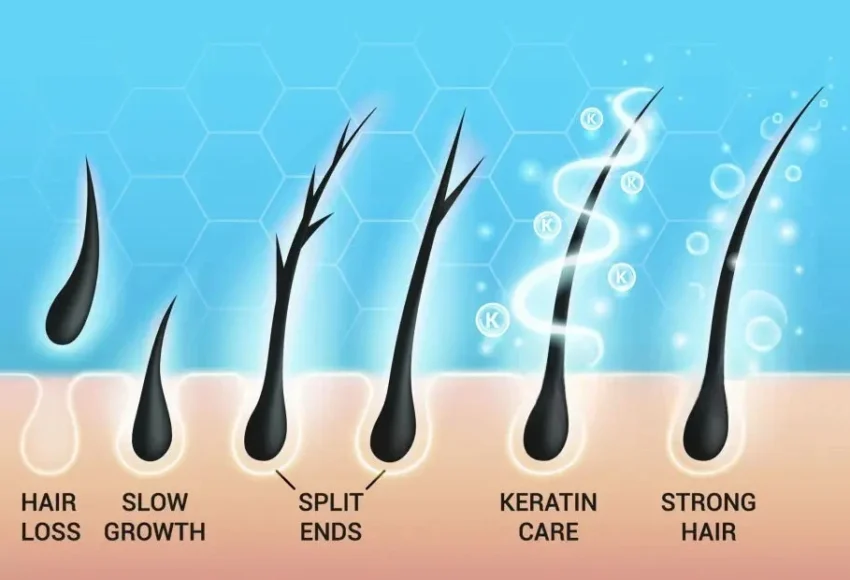
Hair is mainly made up of keratin, a protein. Low protein intake can signal the body to conserve energy, redirecting nutrients away from hair growth.
Micronutrient Gaps
Deficiencies in zinc, biotin, vitamin D, and B-complex vitamins can disrupt follicle activity. While supplements can help, blindly self-prescribing is rarely effective.
Professional hair assessments — often included as part of specialist consultations — help identify nutritional causes before treatment begins. At Merchant City Medical Group, consultations may be complimentary or form part of a tailored treatment package depending on the level of assessment required.
Chronic Stress and Hair Growth Suppression
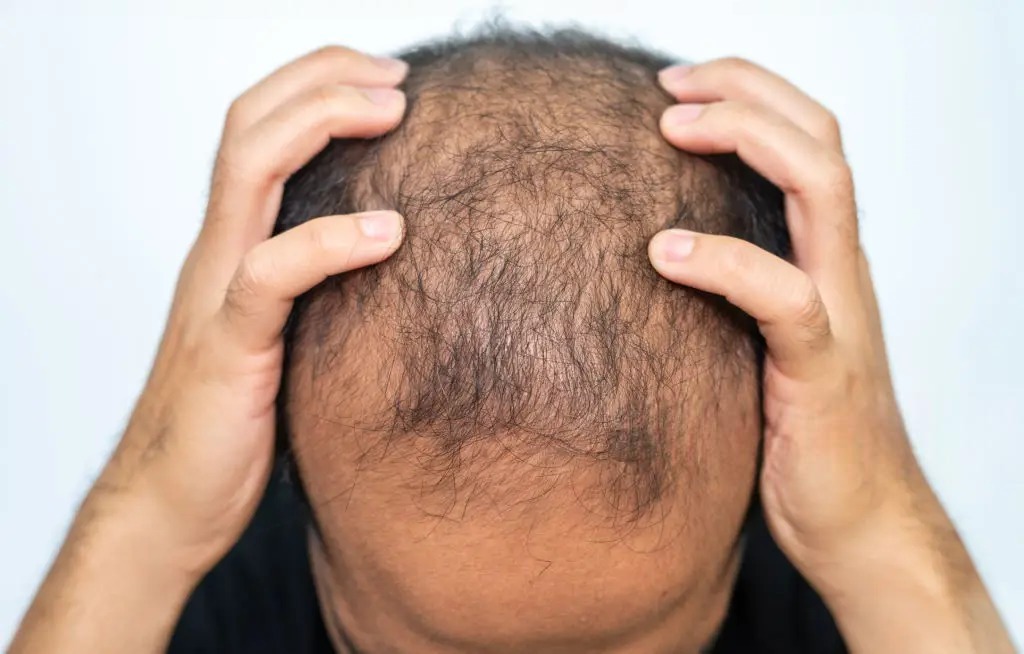
Prolonged stress places the body in a protective state that diverts resources away from hair growth. As a result, more follicles enter the resting phase, leading to delayed and uneven regrowth.
How Stress Disrupts the Hair Cycle
Chronic psychological or physical stress pushes large numbers of hairs into the telogen phase, a condition known as telogen effluvium. While hair eventually regrows, the process is often slow and uneven.
Stress also increases cortisol levels, which can interfere with nutrient absorption and hormone balance — compounding the problem.
Post-Stress Regrowth Delays
Even after stress levels normalise, follicles may take months to re-enter the anagen phase. During this time, hair appears static or noticeably slow to grow.
Clinically supervised regrowth programs, including topical and oral therapies, are often used to accelerate recovery and support follicle reactivation.
Scalp Health and Inflammation
A healthy scalp lies the foundation for strong, consistent hair growth. Inflammation, poor circulation, or chronic scalp conditions can weaken follicles and slow growth over time.
Poor Scalp Circulation
Hair follicles rely on a healthy blood supply. Conditions that reduce scalp circulation — such as tight hairstyles, chronic tension, or inflammation — can significantly slow hair growth.
Scalp Conditions
Dandruff, seborrheic dermatitis, folliculitis, and psoriasis create an unhealthy scalp environment that interferes with follicle function. Hair may grow, but at a much slower pace.
Medical-grade scalp treatments and prescription topicals are often required when over-the-counter products fail. These are commonly included within structured hair treatment plans rather than sold as standalone solutions.
Age-Related Changes in Hair Growth
As the body ages, cellular turnover slows, including within hair follicles. This natural shift results in finer hair, reduced density, and slower regrowth after shedding.
Slower Cell Turnover
As we age, cell regeneration slows — including within hair follicles. This leads to thinner strands and reduced growth speed.
Reduced Growth Density
Older follicles often spend more time in the resting phase and less time actively growing, meaning hair takes longer to regain length after shedding.
While ageing cannot be reversed, targeted treatments can preserve follicle activity. In more advanced cases, surgical restoration such as FUE hair transplantation — typically priced between £2,900 and £8,500 at Merchant City Medical Group — may be considered when medical treatments alone are insufficient.
Overstyling and Mechanical Damage
Repeated exposure to heat, chemicals, and tension weakens the hair shaft and stresses the follicle. Hair may continue growing at the root, but breakage prevents noticeable length retention.
Excessive heat styling, chemical straightening, bleaching, and harsh colouring weaken the hair shaft and increase breakage. Hair may be growing normally at the scalp, but breaking faster than it grows, giving the illusion of slow growth.
Styles that place prolonged tension on the scalp can damage follicles and restrict blood flow, slowing regrowth over time. Correcting styling habits is often one of the simplest yet most overlooked solutions to stalled hair growth.
Medical Conditions and Medications
Certain health conditions and prescribed medications can interfere with the hair growth cycle. In these cases, slow regrowth often reflects internal physiological changes rather than primary hair disorders.
Autoimmune disorders, metabolic conditions, and chronic illnesses can divert the body’s resources away from hair growth. In these cases, hair is often one of the last systems to recover.
Certain medications may slow hair growth as a side effect by disrupting cell division or nutrient absorption. Hair usually recovers once treatment ends, but regrowth can be slow.
Medical oversight ensures hair concerns are addressed without compromising essential treatments.
When Slow Hair Growth Requires Professional Treatment
Persistent slow growth can indicate an underlying condition that requires medical assessment. Early professional intervention improves the chances of stabilising hair loss and restoring healthier growth patterns.
You may benefit from a professional evaluation if:
- Hair hasn’t increased in length for 6–12 months
- Regrowth after shedding is minimal.
- Hair becomes progressively finer
- Family history of pattern hair loss exists
Treatment options range from prescription medications and advanced topicals to regenerative therapies and surgical restoration.
At Merchant City Medical Group, treatment pathways are designed to escalate logically — starting with conservative medical approaches and progressing only when clinically necessary.
Slow Hair Growth Is a Signal, Not a Mystery
Slow hair growth is rarely random. It is usually the body’s way of signalling that something — hormonal, nutritional, genetic, or environmental — needs attention. While patience is important, waiting too long can allow reversible issues to become permanent.
The good news is that modern hair science offers effective, evidence-based solutions. With early assessment, personalised treatment, and realistic expectations, hair growth can often be stabilised, supported, and significantly improved.
Understanding the cause is the key — and from there, the right treatment becomes much clearer.
More Articles
Excellence Record
- 30+ Years of combined experience
- 10 + Experts
- 1000 + Satisfied Patients