Merchant City Medical Group offers surgical and non-surgical cosmetic procedures, from our state of the art clinics throughout the UK & Europe.

Platelet Rich Plasma

Delivering Dreams of a New You. Merchant City Medical Group offer a bespoke service, ensuring a tailored plan is made to suit your individual needs. We pride ourselves in offering the highest quality of standards, providing you the support and expertise you need throughout this life changing journey.

Procedure overview

TYPE OF ANAESTHETIC

Local

LENGTH OF SURGERY

30 Minutes

HOSPITAL STAY

No

RECOVERY

No downtime

Procedure

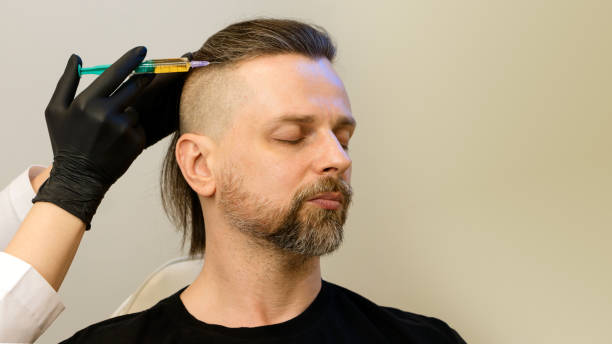
PRP (Platelet-Rich Plasma) for Hair Loss is a non-surgical treatment designed to stimulate hair growth in thinning areas and support transplanted hair. The procedure uses your own plasma and growth factors to nourish hair follicles, improve blood supply, and increase hair shaft thickness.
The treatment is performed in three simple steps:
  • Blood collection a small sample of your blood is drawn.
  • Processing the blood is spun in a centrifuge to concentrate platelets and growth factors.
  • Injection the PRP is injected into the scalp in areas of thinning hair.
PRP can be used alone or alongside other hair restoration treatments and medications. The procedure is minimally invasive, with no downtime or significant side effects.

Our Approach

At Merchant City Medical Group, we provide a personalised PRP treatment plan tailored to your hair type, thinning pattern, and goals. During your consultation, we assess your scalp, discuss expectations, and determine whether PRP alone or in combination with other treatments is most suitable. Our team prioritises patient comfort and ensures you understand the treatment process and expected results.

Benefits

  • Stimulates natural hair growth.
  • Improves thickness and quality of existing hair.
  • Supports transplanted hair.
  • Minimally invasive with no recovery period.
  • Can be combined with other hair restoration procedures.

What are the risks?

PRP treatment is a minimally invasive procedure and is generally very safe, as it uses your own blood products. There is no general anaesthetic required, which significantly reduces overall risk.
The risks specific to PRP treatment include the following:

Mild discomfort or tenderness at the injection sites is common during and shortly after treatment. This usually settles within a short period.

Temporary redness or swelling of the scalp may occur following injections and typically resolves within a few hours to a couple of days.

Small areas of bruising can occur at injection sites but are uncommon and usually short-lived.

The risk of infection is very low due to sterile techniques and the use of the patient’s own plasma. Any signs of infection are rare. 

Some patients report a mild headache or feeling of tightness in the scalp following treatment. This typically resolves on its own.

Response to PRP varies between individuals. While many patients see improvement in hair quality and density, results cannot be guaranteed, and multiple sessions are usually required.

Commonly Asked Questions

Typically, 3–6 treatments are recommended, spaced 4–6 weeks apart, with maintenance sessions every 3–6 months.

Most patients notice improvements in hair density and thickness after 2–3 months, with optimal results around 6–9 months.

PRP works best for patients with thinning hair rather than complete baldness. Your suitability will be assessed during your consultation.

Discomfort is usually minimal. Local anaesthetic or numbing cream can be used to reduce sensitivity during injections.

Yes, PRP can complement hair transplants, medications, or other non-surgical hair loss treatments to improve results.

What to Expect & Platelet Rich Plasma Aftercare

Some discomfort is normal in the first few days after surgery. You may notice soreness, tightness, swelling, or temporary numbness around the nipples and incision sites. Sensitivity in the chest area is common and usually improves over the following weeks.

Swelling and bruising are expected and may increase initially before gradually improving. Bruising can move downward across the chest this is normal. If extensive liposuction has been performed, swelling may feel firm and can take several weeks to settle fully.

Areas of hardness or lumpiness are common during healing and may take several months to soften as the tissues recover.

Most swelling and skin discolouration improves within 4–6 weeks. Scars may appear red or raised for several months but typically soften and fade over time.

Excellence Record

Merchant City Medical Group is proud to be one of the leading providers of Hair Transplant Surgeries and Medical Aesthetics within the UK and Europe. With our extensive team of expert surgeons, nurse practitioners and consultants, you will be met with the utmost dedication and compassion throughout your journey with us.

Book a Free Consultation

Enter all details and submit the form and we will get back to you.
I consent to being contacted via WhatsApp for appointment reminders, updates, and relevant information. Message Frequency varies based on the treatment. text: STOP to stop.

Cosmetic Procedure Screening Questionnaire

It can be used as a screening questionnaire to tell whether you might have BDD.

1) How often do you do you deliberately check your feature(s)? Not accidentally catch sight of it. Please include looking at your feature in a mirror or other reflective surfaces like a shop window or looking at it directly or feeling it with your fingers.
2) To what extent do you feel your feature(s) are currently ugly, unattractive or ‘not right’?
3) To what extent does your feature(s) currently cause you a lot of distress?
4) How often does your feature(s) currently lead you to avoid situations or activities?
5) To what extent does your feature(s) currently preoccupy you? That is, you think about it a lot and it is hard to stop thinking about it?
6) If you have a partner, to what extent does your feature(s) currently have an effect on your relationship with an existing partner? (e.g. affectionate feelings, number of arguments, enjoying activities together). If you do not have a partner, to what extent does your feature(s) currently have an effect on dating or developing a relationship?
7) To what extent does your feature(s) currently interfere with your ability to work or study, or your role as a homemaker? (Please rate this even if you are not working or studying: we are interested in your ability to work or study.)
8) To what extent does your feature(s) currently interfere with your social life? (with other people, e.g. parties, pubs, clubs, outings, visits, home entertainment)
9) To what extent, do you feel your appearance is the most important aspect of who you are?

Do I have BDD?

Body Dysmorphic Disorder

You have scored 0

When you score more than 40 points, this is an indication that you likely have Body Dysmorphic Disorder. However, this is not a formal diagnosis. This test can also be used after a treatment to see if symptoms have improved.

What now?

For more information on BDD and support, you can contact us.

If you are a UK resident, we suggest:

    • reaching out to your GP for more help
    • self-refer to NHS Talking Therapies.

When speaking to a health professional, you may present your clinic history or a printed form to clearly outline the symptoms you’ve experienced.